


This was the first in a series of posts on my recommendations for the physical preparation of soccer players. This was from a blog I had started back in 2016. In this part, I introduce the need for science in the development of the athletic qualities needed for the game, the current approaches we have to training and their limitations. It is a summary and review of all the current scientific literature that I could get my hands on regarding the evidence-based preparation of soccer players for competition.
Soccer is the most popular sport here in Kenya. Just look at the streets of Nairobi during the Mashemeji Derby. The game is never far away from the hearts and minds of people and there’s a reason most primary schools in the country only have a football pitch and footballs in the way of physical activity.
At the higher levels of soccer (i.e. Europe), large amounts of money, greater competition, coupled with the evolution of sports and exercise science into a legitimately recognized part of the development process has led to the introduction of newer and more efficient training methodologies.
While it is a fact that most of these teams have players with extremely high technical and tactical abilities, the majority of coaches at that level have embraced the idea that enhancing the physical capabilities of their players from an evidence-based point of view can have advantageous effects on their skill development and tactical output (1).
Our football here in Kenya has gradually been getting better and better over the years. The competition in the top leagues is fierce, there is more and more money being invested into the development of talent and individuals are actually starting to make a decent living off their involvement with the game. This is slowly trickling down into the lower leagues as more and more teams are being formed in order to try and break into the higher leagues where the real money is.
Sports is a business like an other industry and the only way to keep this trend going is for the game in the country to grow its revenue streams. In football, that is done by attracting more fans to the game. And the only way to do that is to ensure that the product being put out – the football – is of a high quality. In order to improve the quality of the game, we need to have better players. And to have better players, we need to improve how we develop and train the players coming through the various structures of Kenyan football.
I could go on for hours about how to develop better players technically, but I think that there are way more qualified individuals out there for that (though I have been extremely successful in my three years as a coach… GO SANGOMAS!!). (Also as a side note, we also really do need better technical development plans. A long-term athlete development plan for the country is seriously overdue).
No. Here I will give my thoughts about how we can go about improving the athletic traits of our players in order to enable them better express their technical abilities on the pitch.
Common Approaches to Training and their Limitations
The most common approach to conditioning for soccer that I have witnessed (first as a player then as an educated observer) usually involves a heavy reliance on continuous medium intensity work – basically a lot of long-duration runs, some sprint and agility work and other “sport-specific” movements and drills (1).
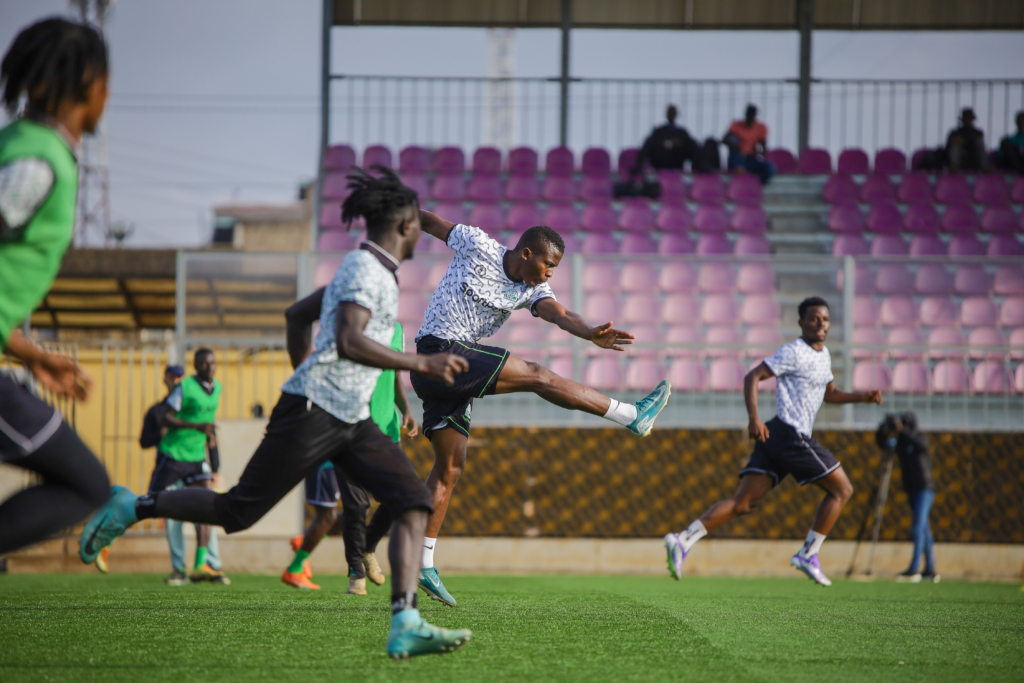
It’s not uncommon for a team to start off a training session with a number of laps around the field at a medium intensity pace, then, after a couple of half-hearted stretches, move into some cone drills for agility and claim that the conditioning work is done. Further still, especially during the pre-season, some teams might also add on a number of heavy sprint sets at the end of training in order to give players a sense of exhaustion as this is what a lot of coaches and players associate with a quality conditioning session.
This isn’t anyone’s fault in particular. The culture of the sport, the persistence of older training methodologies (as most coaches prescribe what they used to do when they were players), the tangible feeling of intensity (and exhaustion) that medium intensity work produces and a simplistic analysis of the physical demands of the sport have all contributed to this approach (1).
While long runs, agility work and sport-specific drills have a place in developing the conditioning needed to play the game, this approach is limited. To begin with, medium-intensity work like that is not enough to stimulate the development of high levels of speed, power and strength. At the same time, drills such as those end up taking place at too high of an intensity to fully recover from quickly enough for the next training sessions or matches (1).
Secondly, when coaches rely too much on sport-specific movements, they run the risk of causing over-use injuries, staleness and limitations to the athletic development of the athletes (1). This is because repeating the same movement patterns over and over causes redundancies to develop between training and matches.
Lastly, training by only mimicking the game severely limits the chances of producing the stimulus necessary for adaptation. During gameplay, players cannot really maintain the intensities necessary to stimulate improvement i.e. you will run faster in a straight line performing sprints than you will during a game. This is because during the game, your ability to maintain a high running speed is limited by things like the tactical structure of the team, marking a player and maintaining a defensive line (1).
In part 2 of the series, I dive into a couple of scientific research articles that attempt to analyse the physical demands of the game in order to craft an evidence-based approach to how we develop and train our players.
- Abreu, John. Strength & Conditioning for Soccer: Parallels Between a Basic Approach for Developing and High-Level Players. Strength Power Speed – High Performance Training. [Online] January 30, 2015. [Cited: June 1, 2017.] http://www.strengthpowerspeed.com/s-c-for-soccer/